

Your Body is Not a Trend: Leading Plastic Surgeons Expose Ethical Crisis and Safety Risks of Social Media Beauty Boom
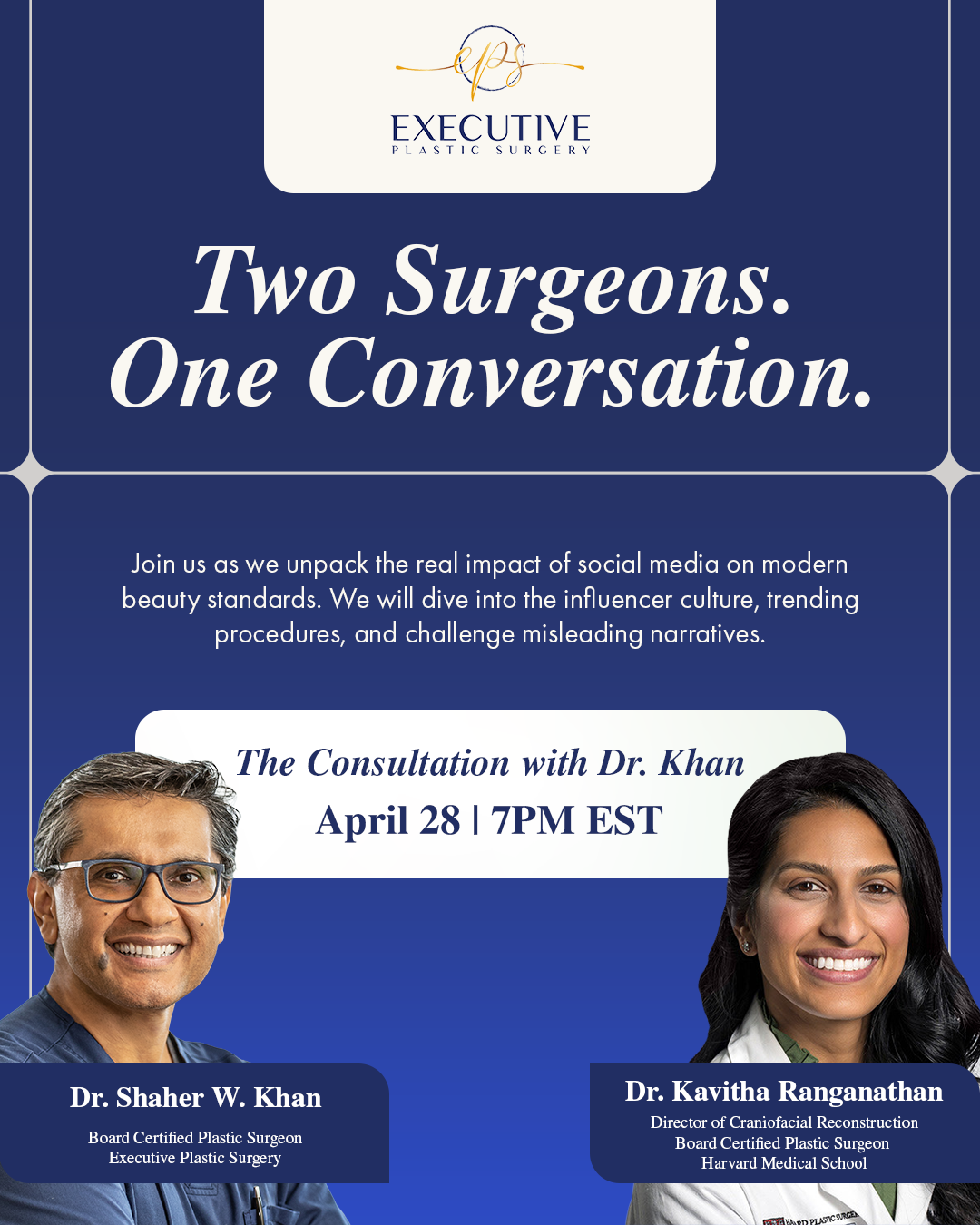
Webinar Announcement: "Two Surgeons. One Conversation." Exploring Social Media's Impact on Beauty Standards with Dr. Shaher W. Khan and Dr. Kavitha Ranganathan
Dr. Khan and Dr. Ranganathan expose the ethical crisis and safety risks of social media beauty trends, emphasizing patient safety and clinical education.
MICHIGAN, MI, UNITED STATES, May 28, 2026 /EINPresswire.com/ -- As the digital landscape increasingly dictates the parameters of human beauty, double-board-certified breast explant doctor and plastic & reconstructive surgeon Dr. Shaher W. Khan and Harvard’s Brigham and Women’s Hospital craniofacial expert Dr. Kavitha Ranganathan convened for an exclusive webinar, “The Consultation with Dr. Khan”, last April 28, 2026.This seminar aimed to dismantle the "Wild West" of the aesthetic industry, addressing the dangerous intersection of social media clout, medical tourism, and the psychological vulnerabilities of a generation raised under the lens of digital distortion.
The Digital Mirror: Reframing Beauty in the Age of Loneliness
The conversation began with a significant assessment of the modern psyche, which Dr. Ranganathan described as grappling with a literal "epidemic of loneliness." This isolation is fueled by an overwhelming influx of deceptive marketing, filters, and influencer sponsorships that heavily distort reality for young people.
"My first message is that your face and your body are not trends," Dr. Ranganathan asserted, urging society to reframe the human body through the lens of function and strength rather than fleeting aesthetic fads.
Dr. Khan expanded on this by highlighting the external pressures driving surgical demand, noting that many patients seek operations not for themselves, but due to the scars of bullying or the expectations of significant others.
Both surgeons agreed that a surgeon’s greatest success is often not found in the operating room, but in helping a patient realize that their perceived physical flaws are actually their "superpower."
The Ethical Guardian: The “Do Not Touch” Principle
At the heart of their shared philosophy is a return to the sacred doctor-patient bond—a relationship that must be devoid of financial conflicts of interest. Dr. Ranganathan emphasized that she maintains no social media sponsorships, ensuring her judgment remains untainted by "clout" or profit. This integrity manifests in Dr. Khan’s frequent employment of the "Do Not Touch" (DNT) principle.
Grounded in the belief that "less is more," the DNT approach advises patients that surgical intervention can sometimes cause more problems than it solves. For younger patients, Dr. Ranganathan advocates for multiple consultations to evaluate social support systems and psychological readiness, ensuring that no one is rushing into a life-altering decision without a foundation of internal confidence.
The Cost of Convenience: Medical Tourism and the “DR to ER” Pipeline
The surgeons then moved to address the lethal trends currently plaguing the industry, specifically the "DR to ER" pipeline. Every week, U.S. hospitals receive patients who traveled abroad for discounted "mommy makeovers" only to return with life-threatening complications, including fat necrosis and mycobacterial infections. Perhaps most alarming is the Brazilian Butt Lift (BBL), which carries a mortality rate of one in 3,000.
Dr. Ranganathan further questioned the ethics of industry societies that issue safety guidelines for the BBL rather than banning a procedure with such a high lethality rate. “I'm not going to do an operation that's only ultimately going to go do no harm. And we want nothing that is going to come even closer to potentially harming the human body in the name of aesthetics,” she states.
Hidden Realities: Silicone Toxicity and the Regulatory Gap
Beyond the immediate risks of surgery, the experts pulled back the curtain on the long-term dangers of breast implants, debunking the common misconception that they are "one-and-done" procedures. As Dr. Khan has an advocacy to address the growing crisis of Breast Implant Illness (BII), given his specialization in safe breast implant removal, he warned that implants can carry severe long-term risks such as silicone toxicity, ruptures, and capsular contracture.
"The FDA mentioned the [breast implants] are not lifetime devices. They do not last in the body, and the longer the patients have them, the higher the chances are that they're going to have problems,” Dr. Khan explains.
To further emphasize the warning of the re-emergence of silicone toxicity, he asserts: “And this is where the patients need to understand that if you have a ruptured implant, it is not healthy or normal to keep that in. You certainly need to get that removed as soon as possible, because we do not want that silicon to basically go and spread to the rest or other parts of the body.”
Addressing the technical precision required for patient safety, Dr. Khan expounded on the necessity of "en bloc" removal—a complex procedure where the entire scar tissue capsule is meticulously dissected away to prevent silicone spillage. "I remove the fascia... the periosteum, perichondrium... that ensures for me the entire capsule is removed, so that if the implant is ruptured, there is no spillage of the silicone," he notes.
This level of surgical complexity makes the current lack of regulation in the U.S. even more perilous. The surgeons described a "Wild West" of state medical laws that allow physicians without specialized plastic surgery training—including gastroenterologists and ER doctors—to legally perform high-risk cosmetic operations. To combat this, Dr. Khan urged patients to look past superficial Instagram followings and verify that their provider is recognized by the official American Board of Plastic Surgery.
A Call for a More Human Healthcare System
The discussion concluded with a broader reflection on a healthcare system that Dr. Ranganathan characterized as "sick care"—a profit-driven business rather than a system of genuine care. She noted that plastic surgeons are often on the front lines of societal issues, treating the physical aftermath of food insecurity, domestic violence, and trauma.
While the financial temptation to perform high-volume, lucrative cosmetic cases is high, Dr. Khan emphasized his feeling of being "genuinely indebted" to his patients. By prioritizing reconstructive integrity and ethical honesty over financial gain, these surgeons are working to restore the true purpose of plastic surgery: healing the human form and protecting the person within.
To hear more about his expert insights on the industry, visit Dr. Khan’s Corner at https://executiveplasticsurgeon.com/dr-khans-corner/ .
Dr. Shaher Khan
Executive Plastic Surgeon
Khan@executiveplasticsurgery.com
Visit us on social media:
LinkedIn
Instagram
Facebook
YouTube
TikTok
Real Insights from Two Plastic Surgeons: Dr. Shaher Khan and Dr. Kavitha Ranganathan
Legal Disclaimer:
EIN Presswire provides this news content "as is" without warranty of any kind. We do not accept any responsibility or liability for the accuracy, content, images, videos, licenses, completeness, legality, or reliability of the information contained in this article. If you have any complaints or copyright issues related to this article, kindly contact the author above.
